
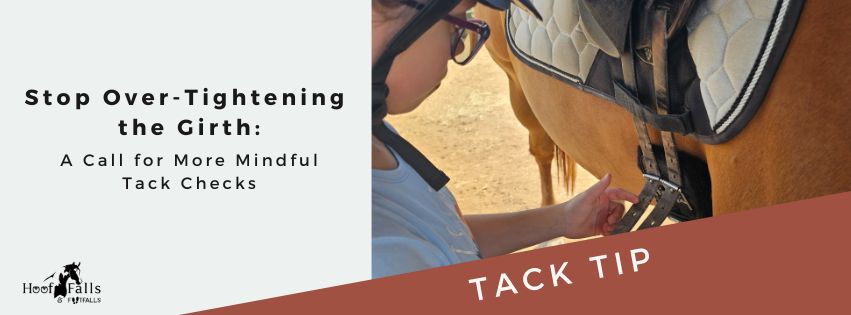
Stop Over-Tightening the Girth: A Call for More Mindful Tack Checks
Let’s talk about a chronic problem in our industry—one that many of us contribute to without even realizing it:
Over-tightening the girth or cinch.
I know, I know. It’s usually done out of love. Out of caution. Out of a deep desire to keep our students safe. We’ve all heard (or lived) the horror stories of what happens when a girth is too loose. Saddle slips, riders fall, students get hurt.
But here’s the truth: Over-tightening can be just as dangerous.
And in adaptive or therapeutic riding programs especially, I’ve seen this happen more often than not.
What Happens When the Girth is Too Tight?
Let’s break down what’s at stake—for both our students and our horses—when we cinch a little too much.
???? Behavioral Red Flags
- Girthiness: Horses pin their ears, bite, or flinch. Sometimes it’s a learned behavior from past discomfort; sometimes it’s a clear reaction to what’s happening right now.
- Reluctance to Move Forward: You may see hesitation transitioning from halt to walk or walk to trot.
- Wiggling or Shifting in Place: That’s your horse telling you something’s off—even while standing still.
⚠️ More Serious Consequences
- Restricted Breathing: Especially in horses with shorter backs or rounder barrels.
- Nerve Compression: There are major nerves under the girth area that, if pinched or compressed, can cause temporary or long-term damage.
- Collapse: Yes, collapse. I’ve personally witnessed horses drop to their knees after being over-tightened—sometimes during loading, sometimes during mounting. Thankfully, we caught these situations before a rider was fully mounted, but they’re sobering reminders that too-tight gear is not “safe” gear.
A Real Story From My Early Instructor Days
I once loosened a girth a couple holes before mounting—intentionally. I even told the volunteer team, “This is the right tightness. Please don’t adjust it.”
Well, someone did.
Just before mounting, that horse collapsed between the mounting ramp and offside block. Thankfully the student wasn’t aboard yet. I was able to release the girth and get the horse back up safely. But the shock on the volunteers’ faces said it all.
That moment solidified a big lesson: We need more education—not just more tightening.
Why Is This So Common?
- We focus too much on the dangers of loose tack—and not enough on what happens when we go too far the other way.
- Tack checks get misinterpreted as always needing to tighten—not check and adjust as needed.
- Volunteers and instructors often overcompensate, thinking they’re playing it safe.
- It’s quicker to overtighten and move on. But what’s faster in the moment can lead to long-term issues for your horse—and risk to your riders.
So What’s the Fix?
Let me introduce the One-Hand Method.
It’s simple, effective, and works for most instructors, volunteers, and even adaptive riders:
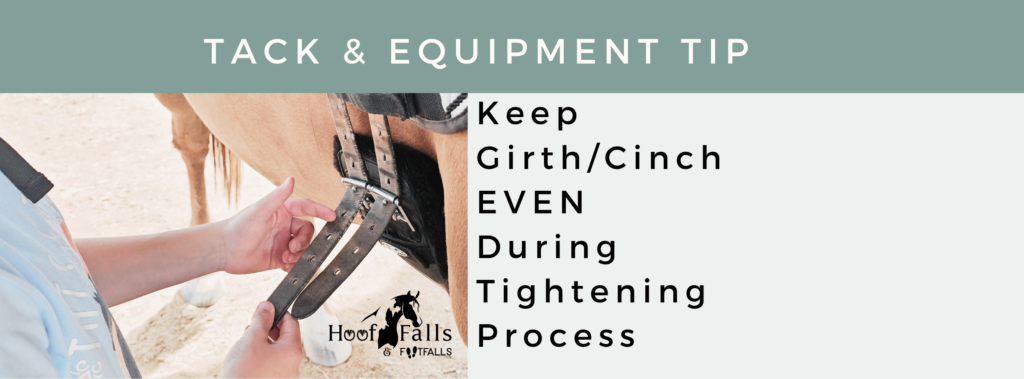
???? You should be able to tighten the girth with just one hand.
If you need two hands and a grunt of effort to pull it up another hole?
You’re probably overtightening.
This method not only helps prevent overtightening, but also promotes a smoother, more comfortable girthing process. Less jerking, less bracing, and a more relaxed horse.
Yes, there are exceptions—smaller riders, people with arthritis, or students with different physical abilities may need a modified approach. But across the board, the One-Hand Method brings consistency and safety to our tack checks.
It’s Time to Break the Cycle
I’ve seen thousands of instructors, volunteers, and students switch to this method. And guess what? The horses respond. The complaints of girthiness go down. Lesson flow improves. Safety increases.
It’s time we stop overtightening out of habit.
Let’s start educating our teams and empowering our volunteers with better tools, not just tighter tack.
So, instructors:
✅ Re-think your tack checks.
✅ Teach appropriate tightness—not “tighten just because.”
✅ Try the One-Hand Method.
✅ And most importantly—keep advocating for your lesson horses just as fiercely as you do your students.
Have You Seen the Impact of Over-Tightening?
I’d love to hear from you. Have you experienced this in your own program? Did you find a method that works for your team? Comment below or share this post with others in your network.
Let’s keep learning together—and keep making the barn a safer, kinder place for our equine partners.

Responses