
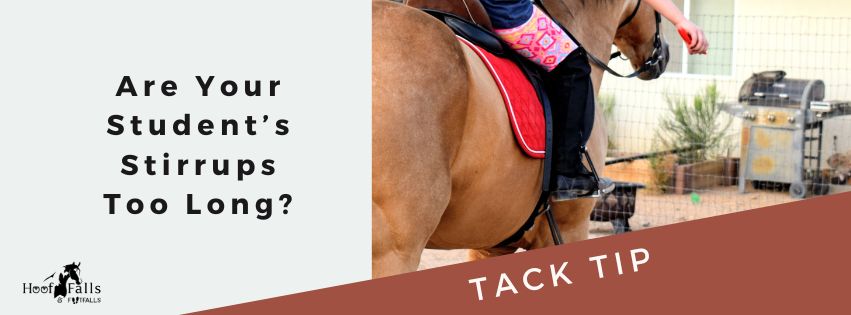
Are Your Student’s Stirrups Too Long?

If you teach adaptive/therapeutic riding, you’ve seen it before.
A student struggles to stay balanced and aligned.
They get left behind in upward transitions.
They pull on the reins to try and stay balanced.
Or their confidence and position never quite builds…no matter how hard they (or you) work.
We often assume these issues are primarily rooted in the rider’s core strength, diagnosis, body awareness, or tone.
But here’s the thing:
What if the real problem isn’t the student?
What if it’s their stirrups?
What if the stirrups are setting the rider up for a struggle and creating a domino effect of poor riding position that then impacts their ability to communicate with the horse, feel confident, and progress.
Stirrup Length Matters—No Matter What Saddle You Use
First things first: this isn’t just an English thing.
Instructors that use western and dressage saddles, I’m talking to you too!
A lot of people assume that because they ride in a Western or dressage saddle, they’re supposed to have longer stirrups. But that’s not really the case…at least, not until a rider has solid foundations and is starting to then move into specializations that might require longer or shorter stirrups…but that comes later after the foundation is laid.
In adaptive/therapeutic riding, this is even more important to understand. Our students often have physical, cognitive, sensory, or emotional factors that make “traditional” or assumed discipline-specific stirrup settings not just ineffective, but sometimes unsafe and a barrier to progress and independence.
It’s not about making them look long and elegant or more “like a cowboy”. It’s about function and biomechanics.
We need to focus on building a secure, balanced, confident rider with the right stirrup length for them. Only after that foundation is solid can we think about adjusting stirrups…shorter or longer…to support advanced maneuvers, specialized seats, or discipline-specific needs.
If a student is fighting against their tack…. fighting to keep their feet in the stirrups, bracing to stay upright, or grabbing the reins for balance, they’re not set up to learn.
Our job as instructors is to give them the foundation they need to succeed. And that starts with getting stirrup length right.
Common Signs Your Student’s Stirrups Are Too Long
Let’s take a closer look at the most common symptoms you might see in your lessons when stirrups are too long—and why they matter.
1️⃣ The “Ski Position”
This is one of the biggest red flags I see in adaptive/therapeutic riding.
Picture it:
- Legs sliding forward, feet pushing out or even going tippy-toe to reach the stirrups
- Pelvis tipping back into a posterior seat
- Upper body hunching forward, head shifting forward to counterbalance
This “ski position” creates a chain reaction that destroys balance and posture. The rider braces against the tack instead of moving with the horse.
It’s not always about a lack of core strength or coordination. Often, it’s simply that their stirrups are too long, forcing them to adopt this braced, ineffective position just to keep their feet in the irons. They may not purposefully be bracing but their mind is prioritizing trying to keep feet in the stirrups any way they can.
And when they’re stiff and bracing, they can’t stay soft and move with the horse.
2️⃣ Getting Left Behind in Upward Transitions
If your student consistently gets left behind the motion in an upward transition, check their stirrups.
When stirrups are too long they are typically already in a position that is setting them up to get “left behind” and long stirrups makes it even harder to have the rider set their body up to follow the horse forward.
What happens next?
- Grabbing the reins to stay balanced
- Pulling on the horse’s face or mouth
- Feeling off balance and tightening or bracing even more
This creates confusion for the horse, tension in the reins, and missed opportunities for learning how to cue transitions effectively. It’s not that they can’t learn good transitions…it’s that their body is set up to fail before they even ask.
3️⃣ Ineffective Downward Transitions
A long stirrup doesn’t just make upward transitions harder. It makes downward transitions harder too.
When a rider’s pelvis is tipped back, it often creates a “driving seat” where the seat is telling the horse to keep going forward even if the voice and reins are saying to slow or stop.
You’ll see:
- Frustrated horses and riders
- Riders having difficulty slowing the horse down
- Needing to rely on the reins to slow the horse vs. voice and body
4️⃣ Bracing, Stiffness, and Losing Movement with the Horse
When riders have to reach for their stirrups, they often lock their joints to try and keep the feet in the stirrups.
You’ll see:
- Stiff, tight legs
- Loss of fluid movement
- Difficulty following the horse’s rhythm
- Bouncing during faster gaits
Instead of being able to move with the horse’s motion, they’re stuck fighting against it because they have to chose weather to keep their stirrups or get in a position where they can actually move with the horse but then risk loosing their stirrup. This body position can make even a calm, smooth horse feel bumpier, more difficult to ride and may seem more “forward” than usual.
5️⃣ Foot Position Problems
Too-long stirrups make good foot and lower leg position nearly impossible.
Look for:
- Heels popping up
- Toes pointed down
- Riders distracted by trying to keep their foot in the stirrup
A good, solid foot position in the stirrup is what allows a rider to stay stable, balanced, and flexible through the ankle so they can absorb movement, stay secure, and fatigue less quickly.
6️⃣ Using the Reins (or the Saddle) for Balance
If you see students constantly pulling on the reins for balance…even at the walk…it may not be solely rooted in a behavior problem or lack of understanding.
They might just be trying to feel balance or more secure. A rider who doesn’t feel secure will use whatever they can to hold themselves in place. That might be:
- Pulling on the reins to balance
- Grabbing the saddle horn or front of the saddle
- Holding on instead of relaxing their hands
Using the reins for balance or feeling the need to hold on to the saddle limits effective communication with the horse which sets both horse and rider up for a more difficult ride than need be.
Less Obvious—but Equally Important—Red Flags
7️⃣ Sensory-Seeking Behaviors or “Wiggle Feet”
This one’s easy to miss and is often not linked to stirrup length!
Some riders with sensory seeking or avoidance tendencies may fidget constantly with their feet, play with the stirrups, or even take their foot out entirely…because their stirrups are too long!
Stirrups that are too long don’t enable the students to get a foot and leg position that gives them consistent sensory feedback to feel grounded and secure.
By shortening the stirrups to an appropriate length, you can often give them that steady, comfortable feedback through the foot and lower leg that reduces fidgeting and helps them focus on the lesson.
8️⃣ Hip, Seat, or Crotch Discomfort
Stirrups that are too long don’t appropriately support the rider and can force them to bear too much weight through their hips and seat bones.
Look out for complaints about:
- Hip tightness or discomfort
- Inner thigh strain
- General seat or crotch area discomfort
- Trying to use the hands to push up out of the saddle (to take weight of the hips and seat)
This is especially common in older riders, those with arthritis, or students with abnormal muscle tone. Shorter stirrups can help distribute their weight better, take pressure off the hips, and make riding more comfortable so they can participate fully.
9️⃣ Confidence Collapse
Finally, the biggest red flag of all: loss of confidence.
A rider who doesn’t feel secure will know it…even if they can’t tell you exactly why.
They might:
- Shrink into a protective, hunched posture
- Grab on and refuse to let go
- Become anxious, resistant, or shut down completely
Long stirrups don’t always help students “stretch tall”, it can actually cause them to feel less secure and confident which then directly impacts their ability to find and maintain good riding posture.
➜ The Big Idea
When you see any of the signs and symptoms listed above in your students, don’t just assume it’s just “them” and something rooted in their attitude, ability, disability, etc. It could be they are not set up for success.
Ask yourself: Could it be the stirrups?
It’s sometimes hard to believe, but one small change in length can unlock better balance, posture, communication, and…most importantly…confidence and independence.
Why Shorter Stirrups May Actually Be Safer and More Supportive
There’s a persistent myth that longer stirrups “look better” or help riders “stretch their leg” or will help them “relax into a good position”
But in adaptive/therapeutic riding, and I would even argue traditional as well, function always beats “the look”.
Shorter stirrups can:
✅ Improve joint stability and support in the ankle, knee, and hips
✅ Increase leg security and reduce excess leg movement
✅ Support better core engagement, alignment, and dynamic pelvis positon.
A secure rider can follow the horse’s motion, use their aids more effectively, and rely less on the reins or death gripping the saddle for balance. It’s our job as instructors to do everything we can to help riders feel secure, balanced, and confident so they can truly learn and grow. Everything….including how we set their stirrups…should set them up for success and work with the student, not against them.
Stirrup Length Isn’t “Set and Done”
Here’s something I see instructors forget all the time: Stirrup needs can change during a single lesson.
- Students with low tone may tighten up as their muscles activate and need a shorter length partway through the lesson
- Students with high tone might start tight but loosen and need adjustment.
- Weather, horse movement, and activity type (like trot work, 2 point, etc.) can all impact what length works best.
Don’t be afraid to adjust mid-lesson! The few seconds it takes to adjust could make all the difference in balance, security, and progress.
Take Action: What to Watch For in Your Next Lesson
✅ Are your students collapsing into the ski position or slouching mid-ride?
✅ Do they grab the reins or lose their stirrups frequently?
✅ Are they complaining of discomfort or seeming anxious and unconfident?
✅ Have you tried adjusting stirrup length to see if it changes the outcome?
These aren’t small issues or things that we let go on just because it’s an adaptive/therapeutic riding lesson. They’re big signals that something needs to change and we need to do something differently to better support our students. Try looking at the stirrups!
Final Thoughts
As adaptive/therapeutic riding instructors, we’re used to planning creative lessons, adjusting our teaching style, and tuning in to subtle cues others might miss.
Let’s bring that same attention to detail to tack adjustments, especially stirrups.
A simple change in length might be the breakthrough your student needs to move from insecurity to independence.
And if you’ve ever watched a student sit taller, smile bigger, or ride more confidently after a quick stirrup adjustment…you already know how powerful this small change can be.
Comment down below! Have you ever had a student make a huge breakthrough in their ability to maintain riding position, perform a skill, or show a jump in confidence just from an adjustment to their stirrup length?

Responses