
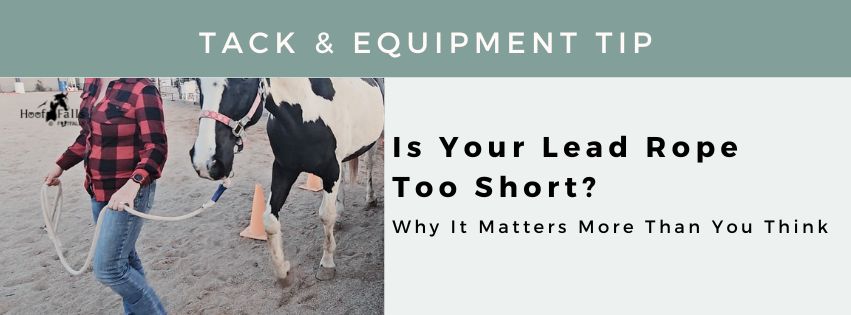
Is Your Lead Rope Too Short? Why It Matters More Than You Think

Let’s talk about something that shows up in almost every adaptive riding lesson…
The too-short lead rope.
I know it doesn’t look like a big deal. And if you’re like most instructors, you’ve probably gotten used to seeing volunteers, students, or even yourself holding the rope just a little too close to the halter. But here’s the thing:
That small habit? It’s doing more damage than you think.
Why It’s a Big Deal
One of the most powerful benefits our students get from riding is the horse’s movement. That rhythmic, natural motion travels through the horse’s body, up into the rider’s pelvis and spine, and it supports everything from balance to sensory regulation.
But when we lead with a tight rope, we restrict the horse’s head and neck. That restriction travels down the spine. And suddenly, the magic movement we count on in our lessons? It’s dulled. Limited. Off-balance.
That tight lead rope doesn’t just affect the horse. It affects the student’s entire experience and the reason they’re there in the first place.
What Else Happens When the Rope is Too Short?
- The horse walks crooked
- The student struggles to stay balanced
- Sensory input becomes inconsistent
- The horse gets fussy or shut down
- Volunteers unknowingly make things harder for both horse and rider
And all of it can stem from one small thing: where we put our hand on that lead rope.
Why Does This Keep Happening?
Short ropes are everywhere and honestly, it’s not usually anyone’s fault. Here are a few reasons why it happens so often:
- Copycat habits – Someone sees it once and repeats it.
- Lack of awareness – Hands creep up without anyone noticing.
- Micromanaging – Horse people, I see you. Trying to control every step.
- Untrained or nervous handlers – They tighten up because they’re unsure.
- Horses with poor ground manners – The rope becomes a crutch instead of a backup.
Sound familiar? You’re not alone.
So What Can We Do About It?
The good news? This is fixable. And it doesn’t require fancy equipment or hours of retraining. Here are a few practical tips that can make a big difference.
1. Mark the Lead Rope
Add a piece of duct tape about 18 inches from the clip (adjust for horse size and handler height). Now your volunteers have a visual cue and a tactile one to guide hand placement.
2. Teach the “Smile” Rule
A soft U-shape in the rope, a “smile,” means your horse has freedom to move, and your handler still has a connection. Teach your team to look for that smile.
3. Use Group Reminders
Instead of calling anyone out, try “Hey everyone, tape check” or “Let’s all check for a smile in our ropes.” Easy, friendly, and effective.
4. Practice Without Holding the Rope
Yep, really. Tuck the lead around the horse’s neck and focus on body language and voice cues. It’s amazing how much better your team (and your horse) will respond when the rope isn’t doing all the work.
5. Train for It on Purpose
Make this part of your regular volunteer and student training. Don’t assume people know where or how to hold the rope. Show them. Practice it. Reinforce it.
It’s About More Than the Rope
This is about respect for the horse, for the rider, and for the process.
When we give the horse their space, we let them do their job. When we teach volunteers how to support without micromanaging, we give students the freedom to experience everything adaptive riding can offer.
It starts with a small shift. And it can have a huge impact.
Responses