6 Steps to Making Unmounted Lessons a Powerful Asset for Your Riding Program
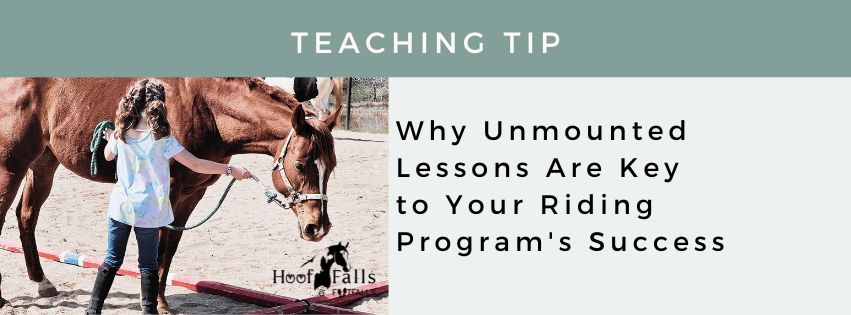
When it comes to offering unmounted lessons in your program, it’s not always easy to get everyone on board. Whether it’s convincing your students, their…
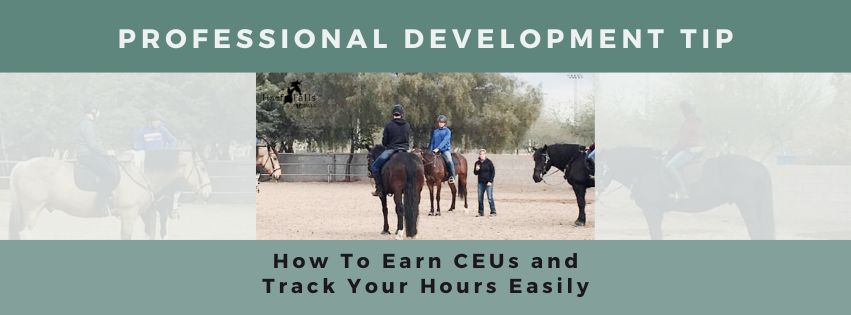
Keeping your certification up to date as an adaptive/therapeutic riding instructor is essential—not just to meet industry standards, but to keep growing in your skills…
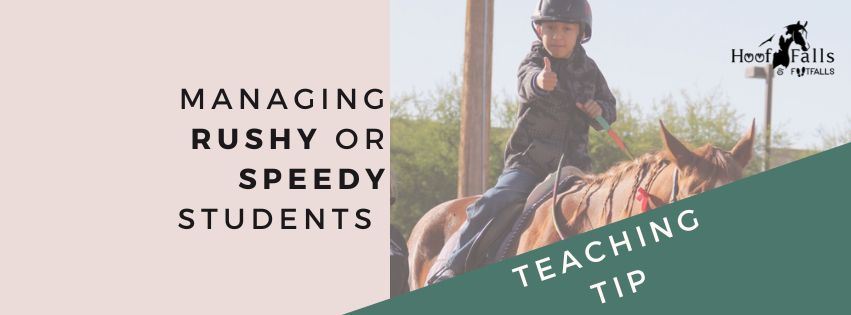
As Adaptive/therapeutic riding instructors, we often encounter students who speed through tasks and focus more on getting a task done rather than how well its…
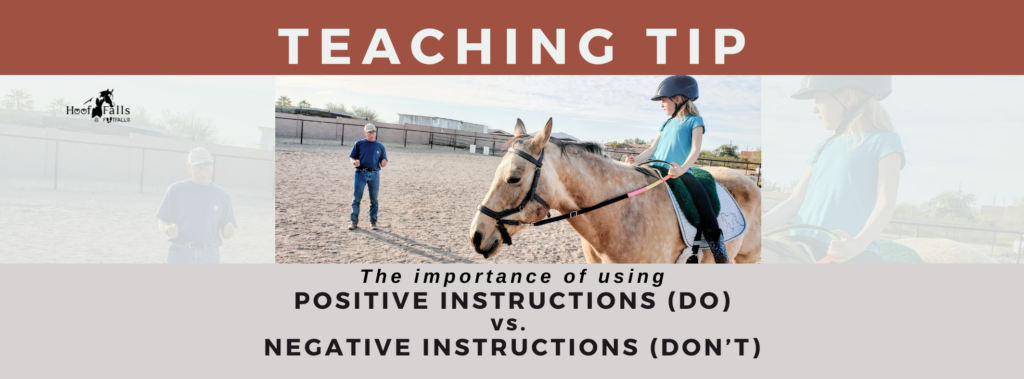
Let’s do a little exercise…read each phrase then see what image comes into your brain: Phrase #1: “Don’t drop the reins”! Phrase #2: “Hold the…
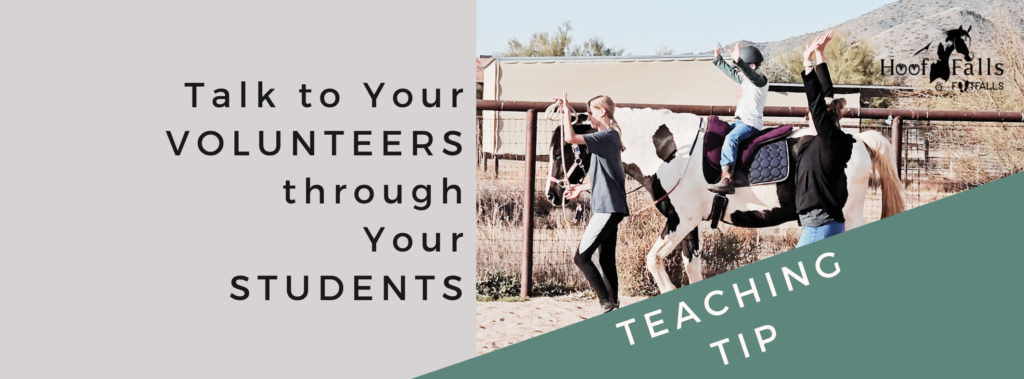
What’s one of my top tips for working with non-verbal, limited verbal, or under responsive students: Don’t leave students out of the plan! Focus your…
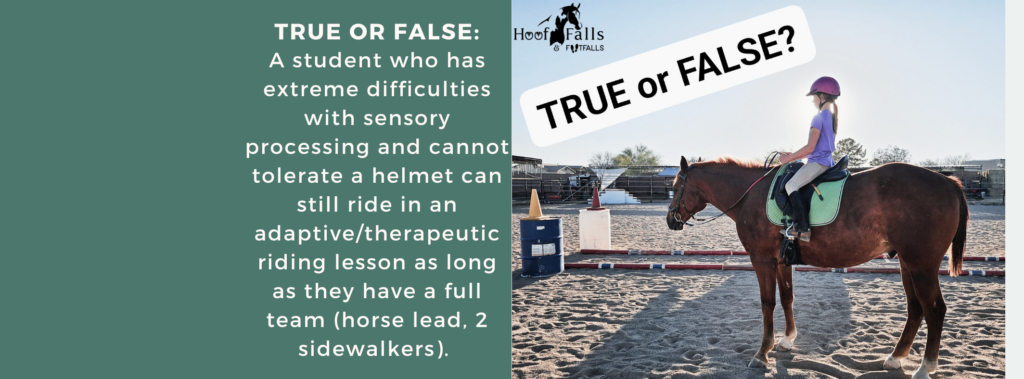
This post was prompted by a true/false question posted on the Hoof Falls & Footfalls Facebook page and the resulting answers, comments, and discussions. A…
TEACHING TIP for adaptive/therapeutic riding GROUP LESSONS: Don’t get “glued” to your lead student/ student that needs the most support. Instead, spread out the feedback…
Original prompt posted on the Hoof Falls & Footfalls Facebook page: Original prompt posted on the Hoof Falls & Footfalls Facebook page: True or False:…
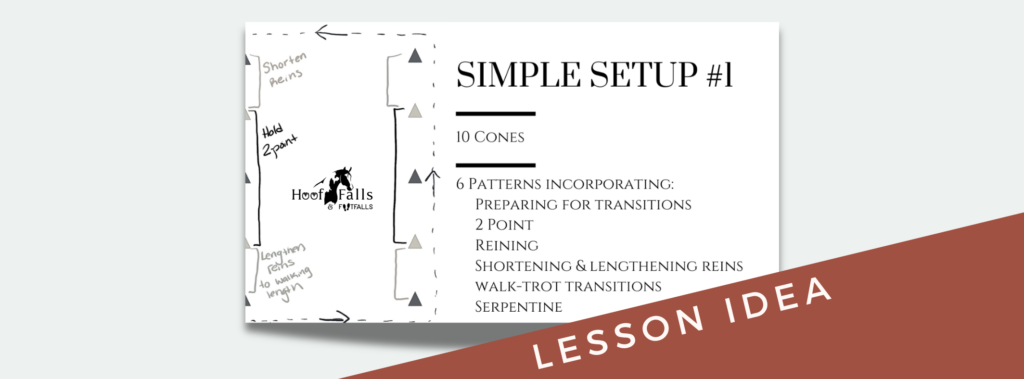
Sometimes all it takes is a few examples of how to use a tool, in this case the arena setup, to get your own creative…
One common “hold” seen in adaptive/therapeutic riding lessons is the “THIGH HOLD”. This hold may also be seen in physical therapy, occupational therapy, and speech…
Please confirm you want to block this member.
You will no longer be able to:
Please note: This action will also remove this member from your connections and send a report to the site admin. Please allow a few minutes for this process to complete.